
How to Match Carpets with Furniture and Wall Colors
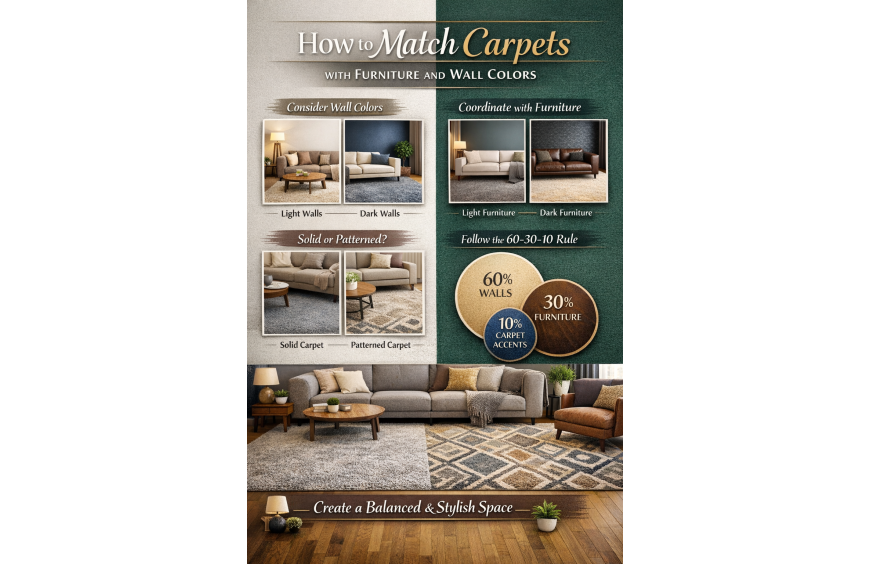
How to Match Carpets with Furniture and Wall Colors
Choosing the right carpet can instantly elevate a space—or completely throw off the balance if not done thoughtfully. A well-matched carpet ties together furniture, wall colors, lighting, and décor to create a cohesive and visually appealing interior. Whether you’re designing a luxury home, staging a property for sale, or refreshing your living space, this guide will help you perfectly match carpets with furniture and wall colors.
1. Start with Your Wall Colors
Walls form the largest visible surface in any room, making them the foundation of your color palette.
Light-Colored Walls
If your walls are white, cream, beige, or pastel:
-
Choose warm-toned carpets like taupe, soft grey, or light brown for balance
-
Go bold with textured or patterned carpets to add depth
-
Avoid overly bright carpets that may overpower the room
Dark-Colored Walls
For charcoal, navy, forest green, or deep brown walls:
-
Opt for lighter carpets to prevent the room from feeling closed in
-
Neutral shades like ivory, sand, or light grey work best
-
Subtle patterns can add interest without clashing
2. Match Carpets with Furniture Tones
Your furniture plays a key role in defining contrast and harmony.
Dark Furniture
With walnut, mahogany, or black furniture:
-
Choose lighter or mid-tone carpets to balance the heaviness
-
Cream, beige, or muted greys create an elegant contrast
Light Furniture
For white, oak, or pastel furniture:
-
Darker carpets add grounding and sophistication
-
Earth tones or soft patterns enhance warmth and character
Mixed Furniture Colors
If your furniture varies:
-
Stick to neutral carpets
-
Textured finishes help unify different shades without visual clutter.
3. Use the 60-30-10 Color Rule
This classic interior design principle ensures balance:
-
60% dominant color (walls)
-
30% secondary color (furniture)
-
10% accent color (carpet & décor)
Your carpet can act as either a subtle supporter or a statement accent depending on your design goals.
4. Choose the Right Carpet Pattern
Solid Carpets
Best for:
-
Busy furniture designs
-
Bold wall colors
-
Minimalist or modern interiors
Patterned Carpets
Ideal for:
-
Neutral walls and furniture
-
Large spaces that need visual interest
-
Traditional or contemporary luxury settings
Tip: Match one color from the carpet pattern with your furniture or walls for cohesion.
5. Consider Texture and Material
Color alone isn’t enough—texture matters.
-
Plush or wool carpets add warmth and luxury
-
Flatweave or low-pile carpets suit modern, minimal homes
-
High-texture carpets work best in neutral palettes
Texture can soften bold colors or enhance subtle tones beautifully.
6. Room-by-Room Carpet Matching Tips
Living Room
-
Neutral carpets offer flexibility
-
Patterned carpets work well in open layouts
Bedroom
-
Soft, warm shades promote relaxation
-
Match carpet undertones with bedding and furniture
Dining Area
-
Darker carpets hide stains better
-
Keep patterns subtle to avoid visual distraction
7. Lighting Makes a Big Difference
Natural and artificial lighting can change how carpet colors appear:
-
Always test carpet samples in your room
-
Observe them during the day and night
-
Warm lighting enhances beige and brown tones
-
Cool lighting highlights grey and blue hues
Final Thoughts
Matching carpets with furniture and wall colors is about balance, contrast, and harmony. When done right, your carpet becomes the unifying element that brings the entire room together. Focus on your base colors, consider texture and lighting, and don’t be afraid to experiment with samples before making a final choice.
A thoughtfully chosen carpet doesn’t just complete a room—it transforms it.