
Different Types of Carpets: Wool, Silk & Synthetic
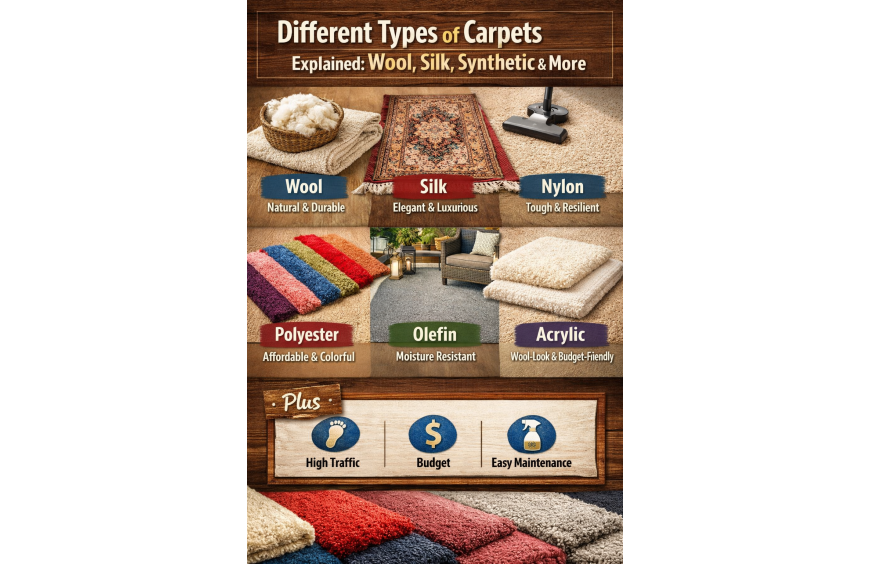
Different Types of Carpets: Wool, Silk & Synthetic
Choosing the right carpet is more than a design decision—it affects comfort, durability, maintenance, and even the value of your space. With so many materials available today, understanding the differences can help you make a smart, long-lasting investment. Here’s a complete guide to the most popular types of carpets, their features, and where they work best.
1. Wool Carpets – Natural Luxury & Comfort
Wool carpets are considered the gold standard in flooring due to their natural origin and premium feel.
Key Features:
-
Soft, warm, and luxurious underfoot
-
Naturally stain-resistant and fire-retardant
-
Excellent insulation and sound absorption
-
Long lifespan with proper care
Best For:
Luxury homes, bedrooms, living rooms, hotels
Things to Consider:
Higher cost and requires professional cleaning
2. Silk Carpets – Elegance & Artistic Value
Silk carpets are prized for their sheen, intricate detailing, and artistic craftsmanship.
Key Features:
-
Extremely fine texture with a natural shine
-
Highly detailed patterns and rich colors
-
Lightweight and visually striking
Best For:
Decorative areas, low-traffic rooms, wall displays
Things to Consider:
Very delicate, expensive, and not suitable for heavy use
3. Nylon Carpets – Durability & Versatility
Nylon is one of the most popular synthetic carpet materials due to its strength.
Key Features:
-
Highly durable and resilient
-
Resistant to wear, stains, and crushing
-
Easy to clean and maintain
Best For:
High-traffic areas, offices, stairs, family homes
Things to Consider:
Less eco-friendly compared to natural fibers
4. Polyester Carpets – Style on a Budget
Polyester carpets are known for vibrant colors and affordability.
Key Features:
-
Soft texture with excellent color retention
-
Resistant to fading and moisture
-
Budget-friendly option
Best For:
Bedrooms, low-to-medium traffic areas, rentals
Things to Consider:
Less durable than nylon in heavy-use spaces
5. Olefin (Polypropylene) Carpets – Moisture Resistant
Olefin carpets are valued for their resistance to moisture and mold.
Key Features:
-
Water and stain resistant
-
Colorfast and budget-friendly
-
Lightweight and quick-drying
Best For:
Basements, outdoor areas, commercial spaces
Things to Consider:
Crushes easily and not ideal for high foot traffic
6. Acrylic Carpets – Wool Look, Lower Cost
Acrylic carpets mimic the appearance of wool at a more affordable price.
Key Features:
-
Soft and warm feel
-
Resistant to moisture, mold, and mildew
-
Colorfast and UV-resistant
Best For:
Bedrooms, decorative areas
Things to Consider:
Lower durability compared to wool and nylon
7. Blended Carpets – Balanced Performance
Blended carpets combine natural and synthetic fibers to offer the best of both worlds.
Key Features:
-
Improved durability with natural softness
-
Cost-effective compared to pure wool or silk
-
Balanced appearance and performance
Best For:
Living rooms, offices, modern homes
Things to Consider:
Quality varies depending on blend ratio
How to Choose the Right Carpet Material
When selecting a carpet, consider:
-
Foot traffic level
-
Budget
-
Maintenance requirements
-
Climate and moisture exposure
-
Design and aesthetic goals
Final Thoughts
Understanding different carpet types helps you choose a flooring solution that fits your lifestyle, design vision, and long-term needs. Whether you prefer the luxury of wool, the elegance of silk, or the practicality of synthetic fibers, the right carpet can transform your space completely.